See more here.
A few years ago the Silicon Valley Homebrew Mobile Phone Club (SVHMPC) formed out of frustration with the closed market for phones, and set out to build something we could program in our pocket. We made some progress but the prototype Gumstix Goliath board never made it into production, and along came the iPhone, which gave some of us the application platform we were looking for to customize. The OpenMoko project is also limping along, and Google Android is finally out there in volume. The FLOW project is open hardware running Android with a Gumstix CPU module. Nice combination for making custom devices.
Showing posts with label SVHMPC. Show all posts
Showing posts with label SVHMPC. Show all posts
Monday, May 25, 2009


Tuesday, November 13, 2007
First look at Android and implications for the Homebrew MyPhone
Google's new Android SDK is a lot more than a Linux distribution, its a complete and documented application framework with developer tools support. The primary language for application development is Java, with a special runtime called the Dalvik virtual machine that is designed to run efficiently on a battery powered device.
The SDK is 55MB, there is available Eclipse support.
Sample applications include Google Maps, mail, webkit based browser and the usual Phone and PIM stuff. The user interface seems to be based on a new set of Java classes, but there is also direct access to the display in C/C++ using SGL for 2D and OpenGL ES for 3D, and audio and video players for things like mp3 and H.264.
From a first pass through the docs, a lot of work has gone into this already. It looks as if it should be portable
to a homebrew phone without much difficulty, and from then on, we are likely to be leveraging a much larger community than the other open alternatives. It appears that the current state of the OpenMoko project is that they have made some progress and have a somewhat usable toolkit written in Python, but that C/C++ development based on GTK+ is painful, and documentation is scarce. It looks to me as if Android has taken the same basic inspiration as OpenMoko, but with a much more professional execution, and with a Java based developer platform.
We will be discussing this at the Homebrew Mobile Phone club meeting on Wednesday. We are holding the meeting at Mozilla's offices and will also be discussing their work on a mobile version of the Mozilla browser.
The SDK is 55MB, there is available Eclipse support.
Sample applications include Google Maps, mail, webkit based browser and the usual Phone and PIM stuff. The user interface seems to be based on a new set of Java classes, but there is also direct access to the display in C/C++ using SGL for 2D and OpenGL ES for 3D, and audio and video players for things like mp3 and H.264.
From a first pass through the docs, a lot of work has gone into this already. It looks as if it should be portable
to a homebrew phone without much difficulty, and from then on, we are likely to be leveraging a much larger community than the other open alternatives. It appears that the current state of the OpenMoko project is that they have made some progress and have a somewhat usable toolkit written in Python, but that C/C++ development based on GTK+ is painful, and documentation is scarce. It looks to me as if Android has taken the same basic inspiration as OpenMoko, but with a much more professional execution, and with a Java based developer platform.
We will be discussing this at the Homebrew Mobile Phone club meeting on Wednesday. We are holding the meeting at Mozilla's offices and will also be discussing their work on a mobile version of the Mozilla browser.
Thursday, May 17, 2007
See you at Techshop at Maker Faire this weekend
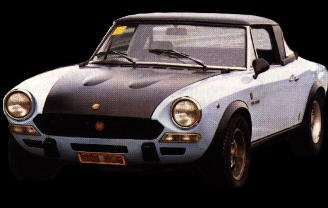
I've been using Techshop to make cases for my homebrew phone on their 3D Printer, and I signed up for annual membership since I have a few other projects to work on (e.g. TIG welding some modifications to my Fiat 124 Abarth Rally replica :-)
I'm going to be at Maker Faire in San Mateo this weekend, helping explain the 3D printer to attendees at the Techshop pavillion, and hanging out with Matt on the SVHMPC booth. I'm on duty from 2pm onwards both Saturday and Sunday for Techshop so I should be easy to find and I'd be happy to chat about how to make mobile phone cases or millicomputing or whatever.
I'm going to be at Maker Faire in San Mateo this weekend, helping explain the 3D printer to attendees at the Techshop pavillion, and hanging out with Matt on the SVHMPC booth. I'm on duty from 2pm onwards both Saturday and Sunday for Techshop so I should be easy to find and I'd be happy to chat about how to make mobile phone cases or millicomputing or whatever.
Tuesday, April 24, 2007
Mobile Phones at Maker Faire
The Silicon Valley Homebrew Mobile Phone Club is going to be featured at Maker Faire this May 19/20th. One of my phone design pictures was used on the site :-)
I've also been continuing to develop the general purpose millicomputing concepts and have been documenting them on my companion blog. I have bought a Gumstix module for use in a phone, and I'm working on benchmarking it at the moment.
I've also been continuing to develop the general purpose millicomputing concepts and have been documenting them on my companion blog. I have bought a Gumstix module for use in a phone, and I'm working on benchmarking it at the moment.
Wednesday, March 28, 2007
Low Power Microprocessors for General Purpose Computing
While researching devices for my home brew mobile phone, I've realized that the current generation of CPUs for mobile devices are actually seriously powerful, very low cost and use almost no power. The performance per watt and per dollar seems to be an order of magnitude better than the PC-class CPUs that are common in commodity servers nowadays. The absolute performance and memory capacity is lower, but is comparable to common PC hardware from a few years ago, and could be useful for more than running a high end phone or portable games machine. Devices such as the Marvel PXA270 and Freescale i.MX31 run at over 500MHz, some include floating point units, they support at least 128MB of RAM (a single chip), and a myriad of I/O interfaces, with Linux 2.6 support.
While the current mainstream CPUs were driven by the development of the home PC market, this generation is driven by the development of the mobile, battery powered device market, which is a very large. For example the worldwide cellphone market is something like a billion devices a year.
I think that there could be some interesting general purpose computer systems built from low power devices (CPUs that use less than one watt). I looked around but wasn't sure what to search for... I do know about the systems that are sold for embedded use, but they are typically configured using lower speed and lower memory options.
Does anyone know of vendors selling general purpose systems, or a category name for this space?
[Update: I asked around, and thought a while, and decided that this is interesting enough to have its own name "millicomputer" and its own blog "millicomputing"].
While the current mainstream CPUs were driven by the development of the home PC market, this generation is driven by the development of the mobile, battery powered device market, which is a very large. For example the worldwide cellphone market is something like a billion devices a year.
I think that there could be some interesting general purpose computer systems built from low power devices (CPUs that use less than one watt). I looked around but wasn't sure what to search for... I do know about the systems that are sold for embedded use, but they are typically configured using lower speed and lower memory options.
Does anyone know of vendors selling general purpose systems, or a category name for this space?
[Update: I asked around, and thought a while, and decided that this is interesting enough to have its own name "millicomputer" and its own blog "millicomputing"].
Thursday, March 01, 2007
Picture of myPhone
Here are the CAD pictures of the phone, I made the rear case cover translucent so that some of the parts inside can be seen. The big dark block is a Treo650 battery, the block in front of it is the Telit 862 GSM/GPS module that does all the phone stuff... Its 130mm long and 75mm wide, quite big, but thats a 3.7" 480x640 LCD, and its easier to fit off the shelf parts inside :-)


MyPhone Making Progress and ETel Conference
I'm at the O'Reilly ETel conference this week, lots of new and interesting things happening. I've met the OpenMoko people and held the phone (nice hardware, quite compact).
Several people from the SVHMPC are also attending, we have been showing off the cases I made a few weeks ago, and I've been spending way too long on a new and much cooler case design. I've posted my design including all the cad files (this is a completely open source project, including hardware designs) to a page on the Homebrew Mobile Wiki.
Thats the main reason there have been relatively few postings in the last week...
Several people from the SVHMPC are also attending, we have been showing off the cases I made a few weeks ago, and I've been spending way too long on a new and much cooler case design. I've posted my design including all the cad files (this is a completely open source project, including hardware designs) to a page on the Homebrew Mobile Wiki.
Thats the main reason there have been relatively few postings in the last week...
Friday, January 19, 2007
More on Open Phones
Thanks to a comment on my previous open phone post, I am reminded that I forgot to mention OpenMoko. This is a neat looking touch screen Linux phone that should be available in February 2007. I haven't seen one yet, although I have played with the Greenphone and I know someone who has ordered and received a Greenphone, so they are ahead by a couple of months.
In the homebrew mobile club, we are talking about making something with a physically bigger (perhaps 3.7" VGA) touch screen than the OpenMoko (2.8" VGA) or Greenphone (smaller QVGA), big enough to show a more usable keyboard. The existence of multiple open phone projects is great, since the nature of the open source community is that we can all share and reuse code for device drivers, user interface components and applications. We aren't building from scratch every time we want a new feature. In the meantime several of us will have Greenphone's, OpenMoko's and TuxPhone's to play with.
The big screen is pretty much the most expensive part. I like the concept of building a phone, keeping the screen and CPU for a long time, but do upgrades like replacing the GSM modem with a 3G one by performing electronic surgery inside the case.
In the homebrew mobile club, we are talking about making something with a physically bigger (perhaps 3.7" VGA) touch screen than the OpenMoko (2.8" VGA) or Greenphone (smaller QVGA), big enough to show a more usable keyboard. The existence of multiple open phone projects is great, since the nature of the open source community is that we can all share and reuse code for device drivers, user interface components and applications. We aren't building from scratch every time we want a new feature. In the meantime several of us will have Greenphone's, OpenMoko's and TuxPhone's to play with.
The big screen is pretty much the most expensive part. I like the concept of building a phone, keeping the screen and CPU for a long time, but do upgrades like replacing the GSM modem with a 3G one by performing electronic surgery inside the case.
Tuesday, January 16, 2007
Build your own phone, any way you want it!
As an antidote to all the grumbling about the lack of an open developers approach to the Apple iPhone I'm going to talk about some projects that are building open phone platforms.
I'm a member of the Silicon Valley Homebrew Mobile Phone Club, and there are several projects in existence to create a free, open source, software stack and applications for mobile phones. The hardware parts are available off the shelf, so you can buy a complete open phone or use whatever parts you like. All you need is an enclosure, and you are on your way to whatever spec you wanted, with whatever applications you wanted.
Actually, if someone out there knows Autocad and wants to help design some enclosures, the assistance would be appreciated. The SVHMPC often meets at Techshop, where they have a 3D printer that can make anything that can be described by a CAD file in ABS plastic.
The phones use off the shelf GSM modems, that take a SIM card and deal with the network. They operate like any unlocked phone would work, and the GSM modem module prevents anything bad from happening to the network. The command set looks a lot like the old hayes modem AT codes, and Linux device drivers exist to manage some of the common ones. Some of the GSM modems include GPS location services as well, most of them are based on the relatively slow GPRS/EDGE standards for Internet connections.
My own ideal phone starts with a 3.7" VGA resolution touch screen and includes WiFi, bluetooth GPS and a 3G network, but I may have to put up with GPRS for now. The CPU is based on 400MHz ARM chips from Gumstix, and the parts list from the OpenCell project gives you some idea of what's available.
Its going to cost more than an iPhone, won't be as thin, and as cute, but I will be able to make it do whatever I want, and it will be runing as much of the standard Linux 2.6 distribution as I feel like.
I built my first three home computers up from bare PCBs, I still have my soldering iron, and I'm not afraid to use it :-)
I'm a member of the Silicon Valley Homebrew Mobile Phone Club, and there are several projects in existence to create a free, open source, software stack and applications for mobile phones. The hardware parts are available off the shelf, so you can buy a complete open phone or use whatever parts you like. All you need is an enclosure, and you are on your way to whatever spec you wanted, with whatever applications you wanted.
Actually, if someone out there knows Autocad and wants to help design some enclosures, the assistance would be appreciated. The SVHMPC often meets at Techshop, where they have a 3D printer that can make anything that can be described by a CAD file in ABS plastic.
The phones use off the shelf GSM modems, that take a SIM card and deal with the network. They operate like any unlocked phone would work, and the GSM modem module prevents anything bad from happening to the network. The command set looks a lot like the old hayes modem AT codes, and Linux device drivers exist to manage some of the common ones. Some of the GSM modems include GPS location services as well, most of them are based on the relatively slow GPRS/EDGE standards for Internet connections.
My own ideal phone starts with a 3.7" VGA resolution touch screen and includes WiFi, bluetooth GPS and a 3G network, but I may have to put up with GPRS for now. The CPU is based on 400MHz ARM chips from Gumstix, and the parts list from the OpenCell project gives you some idea of what's available.
Its going to cost more than an iPhone, won't be as thin, and as cute, but I will be able to make it do whatever I want, and it will be runing as much of the standard Linux 2.6 distribution as I feel like.
I built my first three home computers up from bare PCBs, I still have my soldering iron, and I'm not afraid to use it :-)
Subscribe to:
Posts (Atom)